
Coping Strategies
Coping strategies have been shown to enhance resilience, allowing athletes to navigate the challenge of performance anxiety and handle relevant setbacks within the game. Developing effective coping mechanisms allows female players, including youth and children, to improve their focus, maintain motivation, and foster a positive mindset that can lead to improved performance on the field while maintaining their well-being in daily life. Evidence also suggests coping strategies play a role in reducing injury risk.
Key takeaways
- The use of coping strategies by athletes has been shown to aid both performance and the athlete well-being.
- Female athletes appear to be more vulnerable to performance-related anxiety and stress.
- A strong support network may be crucial for optimal development of female athletes.
- Techniques such as mindfulness are suitable for developing emotional control.
- Psychological skills should be individualised within the overall development programme.
Strategies
- Problem v emotion Focused

Psychological training to teach coping strategies involves cognitive and behavioural effort to counter both the internal pressures (from yourself) and external pressures. (demands of the game, parents, coach etc). Such programmes have been shown to improve both athletic development and psychological well-being.
Strategies can be split into either problem-focused or emotion-focused. Which strategies females prefer or resort to when required is still debated with evidence for and against available. However, recent studies in female football have shown how emotion-focused strategies reduce negative behaviours such as mental withdrawal, with other studies supporting the use of emotion-focused strategies by females. More research with specific factors such as age, gender, coach behaviours and sport type are required as these need to be factored in when suggesting appropriate strategies. No one size fits all approach is currently suggested.
Emotional Intelligence
While males are suggested to lean towards problem-focused solutions with positive effect, females with increased vulnerability to anxiety and stress are thought to benefit from emotion-focused strategies, coinciding with a higher reliance on a social support network.
For all players, the inability to control emotions within the game leads to a loss of concentration, decreased self-esteem and increased anxiety with the associated muscle tension leading to decreased performance. Emotion-focused strategies may allow players to appraise and understand their emotions, enabling them to choose appropriate coping strategies to improve performance and their well-being.
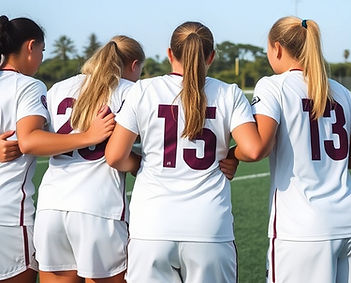
Teaching emotional intelligence could therefore result in players recognising and understanding their emotions, communicating their feelings appropriately and managing scenarios within the game more effectively. Studies suggest that for females, and adolescents in particular, this is only possible within a positive supportive social environment. Social support, team cohesion and an autonomy-supportive coach therefore appear crucial for development of emotional intelligence in female players.

Research limitations - While evidence can be found for a range of positive outcomes for psychological techniques, well designed research within this area, especially on female athletes, is limited and therefore open to interpretation. Findings therefore need to be put into context and used with awareness of this fact.
Practical strategies
Mindfulness training with non-judgemental awareness of emotions has been shown to enhance concentration. While other acceptance-based techniques involving emotional regulation have also been shown to have positive benefits on performance and well-being. These include cognitive re-appraisal whereby a player restructures their thoughts and emotions.
The positive impact of the psychological training techniques of imagery, self-talk, goal-setting and arousal-regulation are supported by research. Relaxation techniques involving control of breathing and muscular tension (Deep breathing and PMR) are also linked with decreased competitive anxiety. The technique of positive framing has been linked with both reduced injury risk in female adolescent footballers and quicker return to sport when used as part of injury rehabilitation programme.
Psychological skills Training(PST)
Evidenced-based psychological interventions have been shown to be effective in improving performance and well-being amongst athletes. Specific techniques should be taught to female footballers as part of a broad PST programme that aims to build in balanced scheduling for both sport and outside sport commitments. Females, and in particular youth and adolescents, require a strong social support network that should be built into the coaching environment allowing pro-active communication with coaches who should aim to provide motivational feedback. Regular monitoring of individuals both formally and informally can aid in pre-empting stressors that can be part of competitive sport. Finally, the programme should aim to individualise support based on the athlete's needs with a central aim of developing effective emotional control.

Reference list
Ajilchi, B., Amini, H.R., Ardakani, Z.P., Zadeh, M.M. and Kisely, S. (2019). Applying mindfulness training to enhance the mental toughness and emotional intelligence of amateur basketball players. Australasian Psychiatry, 27(3), pp.291–296. doi:https://doi.org/10.1177/1039856219828119. Arnold, R., Fletcher, D. and Daniels, K. (2017). Organisational stressors, coping, and outcomes in competitive sport. Journal of Sports Sciences, 35(7), pp.694–703. doi:https://doi.org/10.1080/02640414.2016.1184299. Barker, J.B., Slater, M.J., Pugh, G., Mellalieu, S.D., McCarthy, P.J., Jones, M.V. and Moran, A. (2020). The effectiveness of psychological skills training and behavioral interventions in sport using single-case designs: A meta regression analysis of the peer-reviewed studies. Psychology of Sport and Exercise, 51, p.101746. doi:https://doi.org/10.1016/j.psychsport.2020.101746. Berastegui-Martínez, J. and López-Ubis, J.C. (2022). Effects of an intervention programme designed to improve emotional intelligence and foster the use of coping strategies among professional female football players. Heliyon, 8(7), p.e09860. doi:https://doi.org/10.1016/j.heliyon.2022.e09860. Dolenc, P. (2015). Anxiety, Self-Esteem and Coping With Stress in Secondary School Students in Relation to Involvement in Organized Sports / Anksioznost, Samospoštovanje In Spoprijemanje S Stresom Pri Srednješolcih V Povezavi Z Vključenostjo V Organizirano Športno Aktivnost. Slovenian Journal of Public Health, [online] 54(3), pp.222–229. doi:https://doi.org/10.1515/sjph-2015-0031. Everhart, J.S., DiBartola, A.C., Blough, C., Schiele, S.E., Harris, K.M., Emery, C.F. and Flanigan, D.C. (2021). Positive reframing: An important but underutilized coping strategy in youth athletes undergoing sports-related knee surgery. Journal of Athletic Training, 56(12). doi:https://doi.org/10.4085/1062-6050-0618.20. Ferrer, L. (2013). Procedure for identifying the appropriate positive emotions to reverse the distress associated with free throws in basketball. [online] Research Gate. Available at: https://www.researchgate.net/publication/329436622_Procedimiento_de_identificacion_de_las_emociones_positivas_adecuadas_para_revertir_el_distres_asociado_a_los_tiros_libres_en_baloncesto [Accessed 17 Dec. 2025]. Vol 8, No. 1 pp 19-38. Hoar, S.D., Crocker, P.R.E., Holt, N.L. and Tamminen, K.A. (2010). Gender Differences in Adolescent Athletes’ Coping with Interpersonal Stressors in Sport: More Similarities than Differences? Journal of Applied Sport Psychology, 22(2), pp.134–149. doi:https://doi.org/10.1080/10413201003664640. Jekauc, D., Fritsch, J. and Latinjak, A.T. (2021). Toward a Theory of Emotions in Competitive Sports. Frontiers in Psychology, 12(790423). doi:https://doi.org/10.3389/fpsyg.2021.790423. Jeong, L. and Li, D. (2024). Psychological well-being from sports injuries in adolescence: A narrative review. Cureus, [online] 16(7). doi:https://doi.org/10.7759/cureus.64018. Jones, B.J., Kaur, S., Miller, M. and Spencer, R.M.C. (2020). Mindfulness-Based Stress Reduction Benefits Psychological Well-Being, Sleep Quality, and Athletic Performance in Female Collegiate Rowers. Frontiers in Psychology, [online] 11. doi:https://doi.org/10.3389/fpsyg.2020.572980. Kerdijk, C., van der Kamp, J. and Polman, R. (2016). The Influence of the Social Environment Context in Stress and Coping in Sport. Frontiers in Psychology, 7(875). doi:https://doi.org/10.3389/fpsyg.2016.00875. Li, S., Wu, Q. and Chen, Z. (2020). Effects of Psychological Interventions on the Prevention of Sports Injuries: A Meta-analysis. Orthopaedic Journal of Sports Medicine, 8(8), p.232596712092832. doi:https://doi.org/10.1177/2325967120928325. Lindsay, R.S., Larkin, P., Kittel, A. and Spittle, M. (2021). Mental imagery training programs for developing sport-specific motor skills: a systematic review and meta-analysis. Physical Education and Sport Pedagogy, 28(4), pp.1–22. doi:https://doi.org/10.1080/17408989.2021.1991297. Mark A Chen, P.A. (2014). Gender Differences in Mental Toughness and Coping with Injury in Runners. Journal of Athletic Enhancement, 03(06). doi:https://doi.org/10.4172/2324-9080.1000183. McEwan, D., Harden, S.M., Zumbo, B.D., Sylvester, B.D., Kaulius, M., Ruissen, G.R., Dowd, A.J. and Beauchamp, M.R. (2016). The effectiveness of multi-component goal setting interventions for changing physical activity behaviour: a systematic review and meta-analysis. Health Psychology Review, [online] 10(1), pp.67–88. doi:https://doi.org/10.1080/17437199.2015.1104258. McManama O’Brien, K.H., Rowan, M., Willoughby, K., Griffith, K. and Christino, M.A. (2021). Psychological Resilience in Young Female Athletes. International Journal of Environmental Research and Public Health, 18(16), p.8668. doi:https://doi.org/10.3390/ijerph18168668. Meijen, C. and Martin, E.A. (2024). ‘I don’t want to be seen as period prone’: An exploration of psychological strategies used across the menstrual cycle. International Journal of Sports Science & Coaching, 19(6). doi:https://doi.org/10.1177/17479541241269274. Modena, R., Bisagno, E., Schena, F., Carazzato, S. and Vitali, F. (2022). How Do Elite Female Athletes Cope with Symptoms of Their Premenstrual Period? A Study on Rugby Union and Football Players’ Perceived Physical Ability and Well-Being. International Journal of Environmental Research and Public Health, 19(18), p.11168. doi:https://doi.org/10.3390/ijerph191811168. Mosewich, A.D., Sabiston, C.M., Kowalski, K.C., Gaudreau, P. and Crocker, P.R.E. (2019). Self-Compassion in the Stress Process in Women Athletes. The Sport Psychologist, 33(1), pp.23–34. doi:https://doi.org/10.1123/tsp.2017-0094. Nicholls, A.R., Polman, R., Levy, A.R., Taylor, J. and Cobley, S. (2007). Stressors, coping, and coping effectiveness: Gender, type of sport, and skill differences. Journal of Sports Sciences, 25(13), pp.1521–1530. doi:https://doi.org/10.1080/02640410701230479. Nikander, J., Saarni, J., K. Ihalainen, J. and Valtonen, M. (2022). Online Guided ACT Intervention for Enhancing the Psychological Well-being of Female Soccer Players in Pre-season. Scandinavian Journal of Sport and Exercise Psychology, 4(1), pp.41–50. doi:https://doi.org/10.7146/sjsep.v4i1.130136. Nogueira, J.M., Simães, C., Morais, C., Mansell, P. and Gomes, A.R. (2025). Coping Strategies Before Competition: The Role of Stress, Cognitive Appraisal, and Emotions. Sports, [online] 13(10), pp.366–366. doi:https://doi.org/10.3390/sports13100366. Nuetzel, B. (2023). Coping Strategies for Handling Stress and Providing Mental Health in Elite athletes: a Systematic Review. Frontiers in Sports and Active Living, [online] 5(1). doi:https://doi.org/10.3389/fspor.2023.1265783. Olmedilla, A., Moreno-Fernández, I.M., Gómez-Espejo, V., Robles-Palazón, F.J., Verdú, I. and Ortega, E. (2019). Psychological Intervention Program to Control Stress in Youth Soccer Players. Frontiers in Psychology, 10. doi:https://doi.org/10.3389/fpsyg.2019.02260. Omar-Fauzee, M.S., Abd-Latif, R., Tajularipin, S., Manja, R. and Rattanakoses, R. (2011). The Coping Strategies Employed by Female College Athletes after Losing a Game. International Journal of Psychological Studies, 3(1). doi:https://doi.org/10.5539/ijps.v3n1p50. Reinebo, G., Alfonsson, S., Jansson‐Fröjmark, M., Rozental, A. and Lundgren, T. (2023). Effects of psychological interventions to enhance athletic performance: A systematic review and meta-analysis. Sports Medicine, 54(1). doi:https://doi.org/10.1007/s40279-023-01931-z. Rice, S.M., Purcell, R., De Silva, S., Mawren, D., McGorry, P.D. and Parker, A.G. (2016). The Mental Health of Elite Athletes: A Narrative Systematic Review. Sports Medicine, [online] 46(9), pp.1333–1353. doi:https://doi.org/10.1007/s40279-016-0492-2. Röthlin, P., Horvath, S., Trösch, S., Holtforth, M.G. and Birrer, D. (2020). Differential and shared effects of psychological skills training and mindfulness training on performance-relevant psychological factors in sport: a randomized controlled trial. BMC psychology, [online] 8(1), p.80. doi:https://doi.org/10.1186/s40359-020-00449-7. Rutkowska, K. and Bergier, J. (2015). Psychological Gender and Emotional Intelligence in Youth Female Soccer Players. Journal of Human Kinetics, 47(1), pp.285–291. doi:https://doi.org/10.1515/hukin-2015-0084. Sabato, T., Walch, T. and Caine, D. (2016). The elite young athlete: strategies to ensure physical and emotional health. Open Access Journal of Sports Medicine, [online] Volume 7(1), pp.99–113. doi:https://doi.org/10.2147/oajsm.s96821. Sánchez-Ruiz, R., Gil-Caselles, L., Alejo García-Naveira, Félix Arbinaga, Ruiz-Barquín, R. and Olmedilla-Zafra, A. (2025). Competitive Anxiety, Sports Injury, and Playing Category in Youth Soccer Players. Children, 12(8), pp.1094–1094. doi:https://doi.org/10.3390/children12081094. Santoso, I. and Rahmah, F.A.A. (2025). Effectiveness of Progressive Muscle Relaxation in Reducing Competitive Anxiety in Athletes: A Systematic Review. Majalah Ilmiah Fisioterapi Indonesia, [online] 13(1), p.106. doi:https://doi.org/10.24843/mifi.2025.v13.i01.p19. Silva, A.A. da, Fortes, L. de S., Carvalho, L.P. da C., Moraes, J.F.V.N. de, Carvalho, R.G. da S. and Nascimento Júnior, J.R.A. do (2022). Quality of coach-athlete relationship and coping as associated factors of stress, anxiety, burnout, and depression symptoms of soccer players in transition to professional: a prospective study. Motriz: Revista de Educação Física, 28. doi:https://doi.org/10.1590/s1980-657420220008421. Silva, Lucas, G., Leonardo, Vila, F., Gustavo, R. and Andrade, R. (2023). Coping in soccer athletes: A systematic review. Journal of Physical Education, [online] 34(1). doi:https://doi.org/10.4025/jphyseduc.v34i1.3412. Tod, D., Hardy, J. and Oliver, E. (2011). Effects of Self-Talk: A Systematic Review. Journal of Sport and Exercise Psychology, [online] 33(5), pp.666–687. doi:https://doi.org/10.1123/jsep.33.5.666. Tomczyk, C.P., Shaver, G. and Hunt, T.N. (2019). Does anxiety affect neuropsychological assessment in college athletes? Journal of Sport Rehabilitation, 29(2), pp.1–5. doi:https://doi.org/10.1123/jsr.2018-0123. Toussaint, L., Nguyen, Q.A., Roettger, C., Dixon, K., Offenbächer, M., Kohls, N., Hirsch, J. and Sirois, F. (2021). Effectiveness of Progressive Muscle Relaxation, Deep Breathing, and Guided Imagery in Promoting Psychological and Physiological States of Relaxation. Evidence-Based Complementary and Alternative Medicine, [online] 2021(1), pp.1–8. doi:https://doi.org/10.1155/2021/5924040. Tranaeus, U., Ivarsson, A., Johnson, U., Weiss, N., Samuelsson, M. and Skillgate, E. (2021). The Role of the Results of Functional Tests and Psychological Factors on Prediction of Injuries in Adolescent Female Football Players. International Journal of Environmental Research and Public Health, 19(1), p.143. doi:https://doi.org/10.3390/ijerph19010143. Ventaja-Cruz, J., Cuevas Rincón, J.M., Tejada-Medina, V. and Martín-Moya, R. (2025). Psychological determinants of performance in women’s football: a systematic review on resilience, anxiety, motivation and cohesion. Retos, 64, pp.242–253. doi:https://doi.org/10.47197/retos.v64.111614. Wei, D., Xue, J. and Sun, B. (2025). Team vs. individual sports in adolescence: gendered mechanisms linking emotion regulation, social support, and self-efficacy to psychological resilience. Frontiers in Psychology, 16. doi:https://doi.org/10.3389/fpsyg.2025.1636707.
